

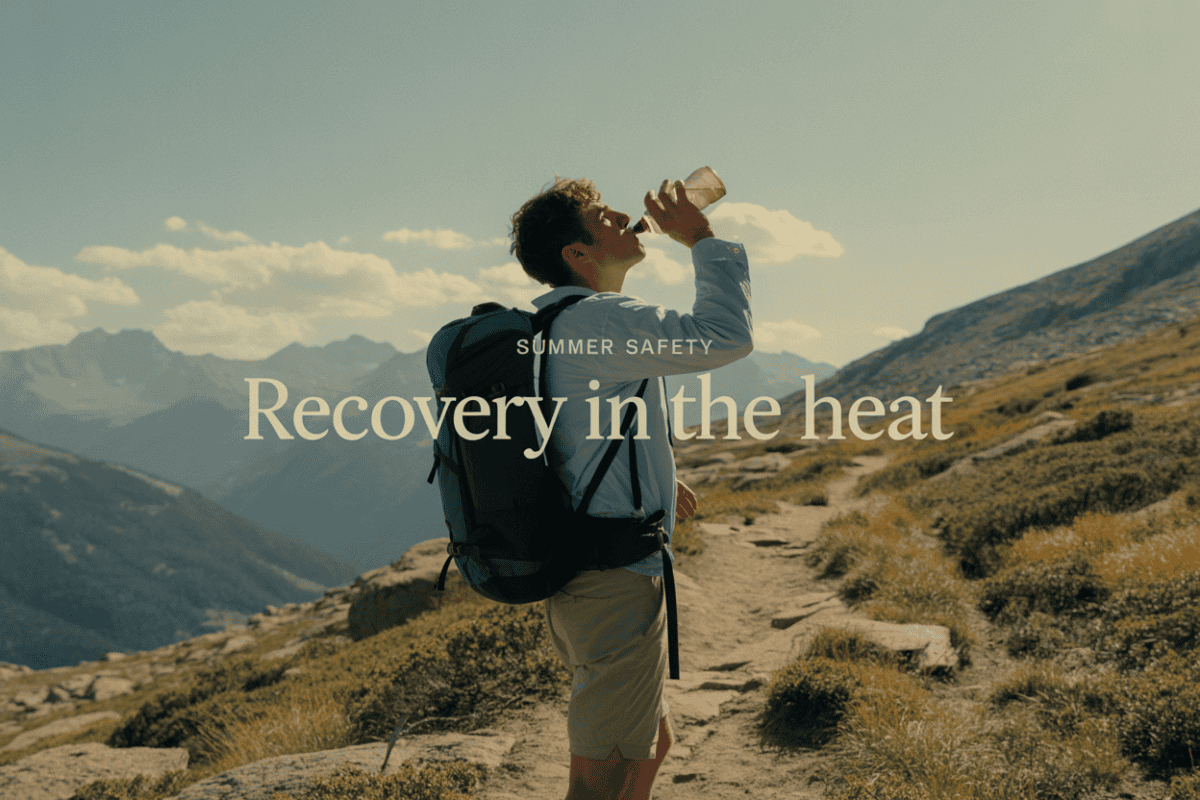
It sounds almost too simple to matter, but in early recovery — especially through a hot Colorado summer at altitude — hydration and heat safety are genuinely important. The recovering body is already under strain, and heat adds a load that can quietly become dangerous.
Why recovery raises the stakes
Several factors make people in early recovery and detox more vulnerable to heat and dehydration:
- Withdrawal dehydrates you. Vomiting, diarrhea, and heavy sweating during detox deplete fluids and electrolytes fast.
- Some medications affect heat regulation. Certain medications used in treatment — including some psychiatric medications and those used in medication-assisted treatment — can affect how the body handles heat, sweating, and hydration. As the CDC notes, some medications increase heat-related risk.
- The body is rebuilding. After substance use, the body’s normal signals — including thirst — can be unreliable while everything recalibrates.
- Altitude. Colorado’s elevation increases fluid loss and can intensify both dehydration and the effects of heat.
In early recovery your body’s warning lights aren’t fully reconnected yet. Don’t wait to feel thirsty — stay ahead of it.
Simple ways to stay safe
- Drink before you’re thirsty. Keep water with you and sip steadily through the day, more if you’re active or sweating.
- Replace electrolytes, not just water, on hot or active days — especially if you’ve had any GI symptoms.
- Time the outdoors. Save hikes and exertion for early morning or evening; rest in shade or air-conditioning during peak heat.
- Know the warning signs. Dizziness, headache, confusion, nausea, a rapid heartbeat, or stopping sweating can signal dehydration or heat illness — and heat stroke is a medical emergency.
- Limit caffeine. It’s easy to over-rely on coffee and energy drinks in early recovery, but they can add to fluid loss.
How this fits into safe detox
In a medically supervised detox, hydration, electrolytes, and nutrition are actively managed — one more reason the supervised setting is safer than going it alone, particularly in summer. Knowing what to expect includes knowing your basic physical needs will be looked after while your body stabilizes.
It’s a small thing that supports a big thing. We care for adults 18 and older through every stage of early recovery. To learn more, call Valiant Detox at (720) 796-6885.
Frequently asked questions
Withdrawal causes fluid loss through vomiting, diarrhea, and sweating; some treatment medications affect heat regulation; and the body’s thirst signals can be unreliable while it recalibrates.
Yes. Some psychiatric medications and medications used in treatment can affect sweating, hydration, and heat tolerance, which raises heat-related risk in summer.
Dizziness, headache, confusion, nausea, rapid heartbeat, or suddenly not sweating. Heat stroke is a medical emergency — call 911.

