

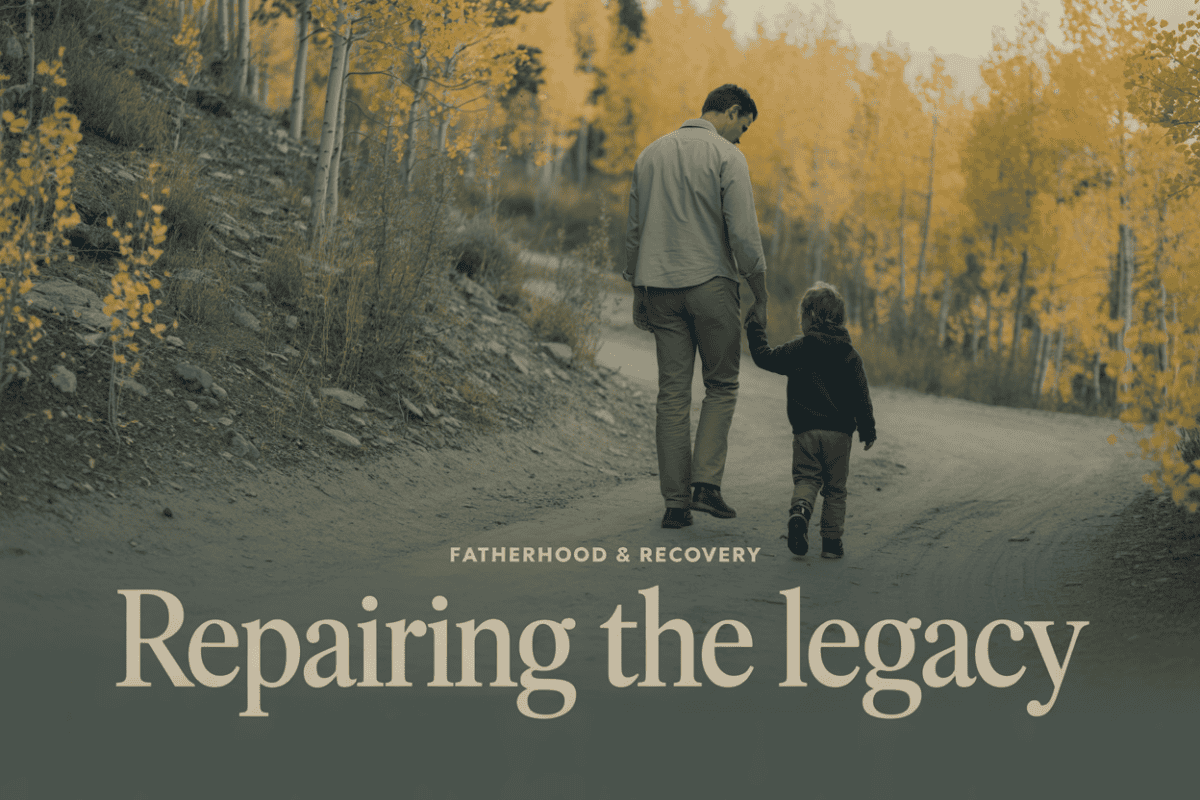
Ask a man in early recovery what scares him most, and a surprising number will not say the cravings or the withdrawal. They will say their kids. Specifically: the fear that they are becoming their own father — absent, unpredictable, or numb — and passing the whole thing down again. With Father’s Day in June, it is worth saying plainly: recovery is how that legacy gets rewritten.
The inheritance no one asked for
Addiction often runs in families, through genetics, modeled behavior, and the wounds left behind. A man who grew up with an addicted or absent father frequently carries two things at once: a vow that he will never do that to his own kids, and a quiet terror that he already is. Children of parents with substance use disorders face elevated risks of their own — a pattern that can repeat across generations until someone interrupts it.
Here is the reframe that changes things: the cycle is not destiny. It is a pattern. And patterns can be broken by the person willing to do the work.
Your children do not need a perfect father. They need a present one — and “present” starts with sober.
Repair, not perfection
Many fathers in recovery get stuck on guilt — the missed games, the broken promises, the moments they were physically there but emotionally gone. That guilt is understandable, but marinating in it helps no one. What children actually respond to is repair: showing up consistently, telling the truth, and demonstrating over time that this version of Dad is the one who stays.
Research on resilient kids is clear that one stable, attuned relationship can buffer a great deal of earlier harm. You cannot undo the past. You can become the steady presence that rewrites what comes next. That is not a consolation prize — it is the whole game.
Why detox is a fatherhood decision
It can feel selfish to leave for treatment — to step away from the household, the income, the daily logistics. Reframed honestly, going to detox is one of the most fatherly things a man can do. A father who is actively using cannot be the parent he wants to be, no matter how hard he tries. Getting safely through detox and into recovery is what makes everything else possible.
And it is not something a man has to navigate cut off from his family. At Valiant Detox we involve and support families, because a father’s recovery is woven into the lives of the people who love him. For men ready for deeper work after stabilizing, our men’s residential program carries that healing forward into the longer work of fatherhood, trauma, and connection.
Starting the rewrite
If you are a father caught in this, here is the encouraging truth: your kids are not keeping the scorecard you think they are. What they will remember is the turn — the moment Dad decided to get well and then proved it, day after day. That memory can outweigh a great deal.
The legacy you were handed does not have to be the one you pass on. The repair starts with a single, unglamorous step: getting sober, safely. Call Valiant Detox at (720) 796-6885, or reach out to our team and we will help you take it — for them, and for you.
Frequently asked questions
Yes. Children do not need a perfect father, they need a present one — and “present” starts with getting sober. Consistent repair over time is what kids respond to.
Addiction patterns are not destiny. Getting sober, telling the truth, and showing up consistently interrupts the cycle for the next generation.
No. A parent who is actively using cannot be the father he wants to be. Getting safely through detox is what makes showing up possible.

