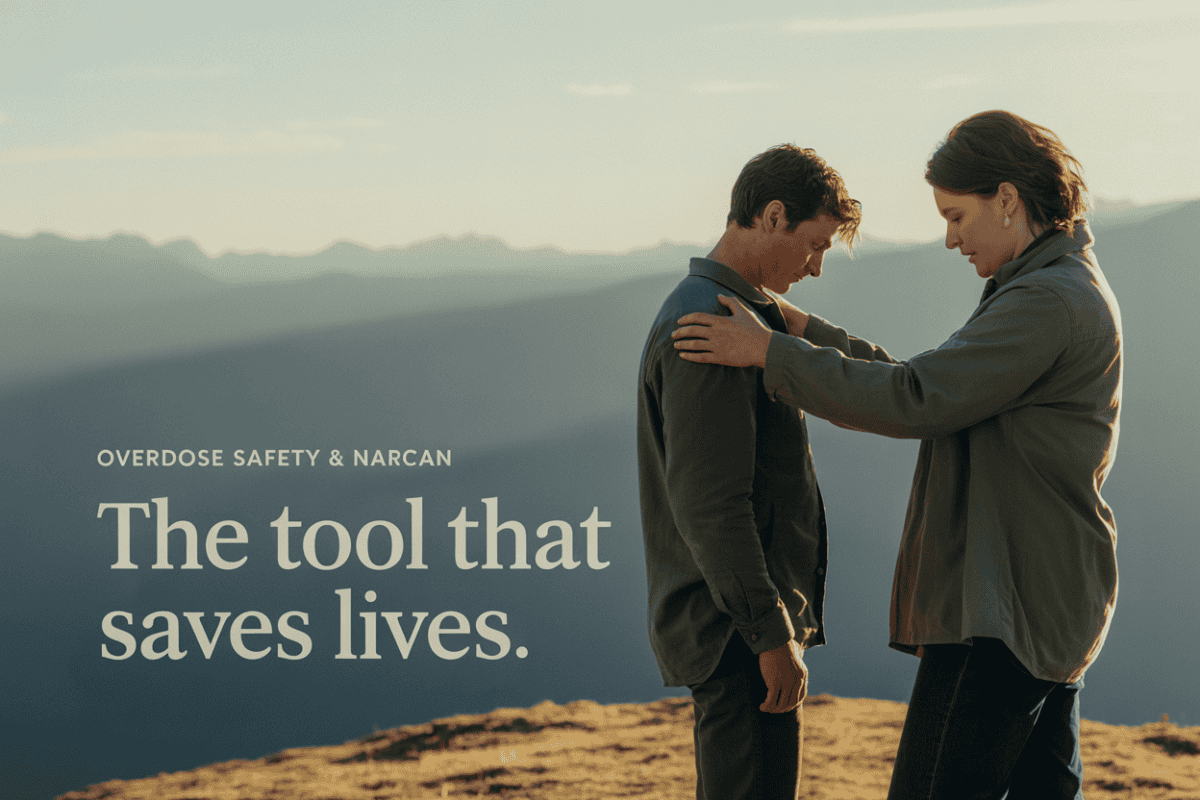
If you love someone who uses opioids, there is one piece of knowledge that can matter more than almost anything else: how to recognize and respond to an overdose. In the fentanyl era, that knowledge — and a small nasal spray — can be the difference between a tragedy and a second chance.
Naloxone is now over the counter
Naloxone, known by the brand name Narcan, is a medication that rapidly reverses an opioid overdose. In 2023, the FDA approved naloxone nasal spray for over-the-counter sale, which means you can now buy it at most pharmacies without a prescription, and many community programs distribute it free. As SAMHSA emphasizes, it is safe, easy to use, and a critical tool for families.
If someone you love uses opioids, keep naloxone in your home the way you’d keep a fire extinguisher. You hope never to need it.
How to recognize an overdose
An opioid overdose can look like:
- Unresponsiveness — they can’t be woken by shouting or a firm sternum rub
- Slow, shallow, or stopped breathing; gurgling or choking sounds
- Blue or gray lips and fingertips; pale, clammy skin
- Very small, pinpoint pupils
- A limp body
When in doubt, treat it as an overdose. Acting unnecessarily will not hurt someone; failing to act can be fatal.
What to do
- Call 911 immediately. Say the person isn’t breathing or is unresponsive.
- Give naloxone. Spray one dose into a nostril. If there’s no response in 2–3 minutes, give a second dose. With fentanyl, multiple doses are often needed.
- Support their breathing. Rescue breaths help if you’re trained.
- Stay until help arrives. Naloxone can wear off before the opioid does, so the person can slip back into overdose — they still need medical care even if they wake up.
- Place them on their side (recovery position) to prevent choking if you must step away.
Most states have Good Samaritan laws that protect people who call for help during an overdose. Calling 911 is always the right move.
After an overdose: a window for help
Surviving an overdose is terrifying — and it can be a turning point. The days afterward are often when someone is most open to getting help. If that moment comes, a medically supervised detox is the safe next step, and we support families through it, not just the person who uses.
Keep naloxone on hand, learn the signs, and know you can call us at (720) 796-6885 when the door to help opens. To talk it through, reach out to our team.
Frequently asked questions
Naloxone nasal spray is available over the counter at most pharmacies without a prescription, and many community and public-health programs distribute it for free.
No. Naloxone only affects opioids. If opioids aren’t present it does no harm, which is why you should give it whenever an overdose is suspected.
Yes, always. Naloxone can wear off before the opioid does, so the person can slip back into overdose and still needs medical care even if they wake up.

