

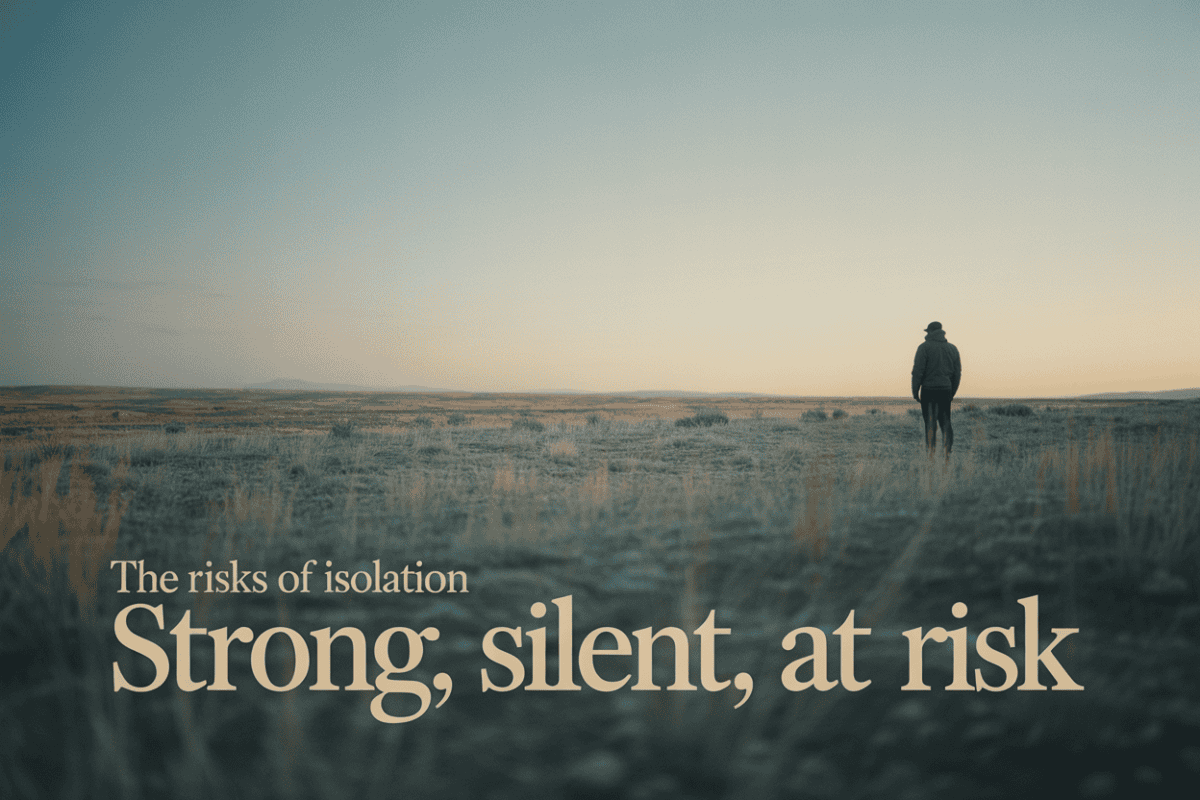
We admire the strong, silent type. The man who handles his business, keeps his problems to himself, and never burdens anyone. It is a flattering picture. It is also, for a lot of men, a slow-acting danger — because the same silence we praise is the soil where loneliness and addiction grow.
A culture that teaches men to disconnect
From boyhood, many men absorb a clear message: needing people is weak, talking about feelings is for someone else, real men go it alone. By midlife, that conditioning often hardens into genuine isolation. Surveys consistently find that men report fewer close friendships than women and are less likely to confide in anyone when they struggle.
This is not a small problem. The U.S. Surgeon General has warned that loneliness and social isolation carry serious health risks, comparable in magnitude to other major public-health threats. For men specifically, that isolation is closely tied to depression, substance use, and worse.
The strong, silent type is not actually strong because he is silent. He is at risk because he is silent.
How isolation and addiction feed each other
The relationship runs both directions, which is what makes it so sticky:
- **Isolation drives use.** Alone with stress, grief, or pain and no outlet, a man reaches for the most available relief — often a substance.
- **Use deepens isolation.** Addiction breeds secrecy and shame, which pull a man further from the people who might help, which leaves him more alone with the substance.
Around and around. Many men do not even register how isolated they have become until they try to think of who they would call in a crisis — and come up short.
Connection is not optional
Here is the truth that runs against everything the “strong silent type” was taught: human beings are wired for connection, and recovery is built on it. The evidence across decades of treatment is consistent — people do better when they are not alone. Connection regulates the nervous system, buffers stress, and gives shame nowhere to hide.
This does not mean a man has to become someone he is not. It means letting a few trusted people in, and being honest with them. For men who have spent decades in self-reliance, that can feel deeply uncomfortable at first. It is also, often, the thing that saves their lives.
Breaking the silence safely
Reaching out for detox and assessment is, in itself, an act of breaking isolation — sometimes the first one in years. At Valiant Detox, a man arrives into a small, supportive setting rather than going it alone on a bathroom floor. Our team has, in many cases, lived this, and we also support the families standing on the other side of that silence, unsure how to reach the man they love.
If you recognize yourself — or the man in your life — in the strong, silent type, take it as a signal, not a compliment. The way out is the very thing the role forbids: letting someone in. Call Valiant Detox at (720) 796-6885 or reach out to our team. You were never meant to do this alone.
Frequently asked questions
Alone with stress or pain and no outlet, people reach for the most available relief — often a substance. Use then breeds secrecy and shame that deepen isolation, creating a self-reinforcing loop.
Yes. The U.S. Surgeon General has warned that loneliness and social isolation carry serious health risks, comparable in scale to other major public-health threats.
Lead with concern rather than confrontation, keep showing up, and offer concrete help. Families can also call Valiant Detox for guidance on reaching a loved one.

